
My Husband Used to be A Fox
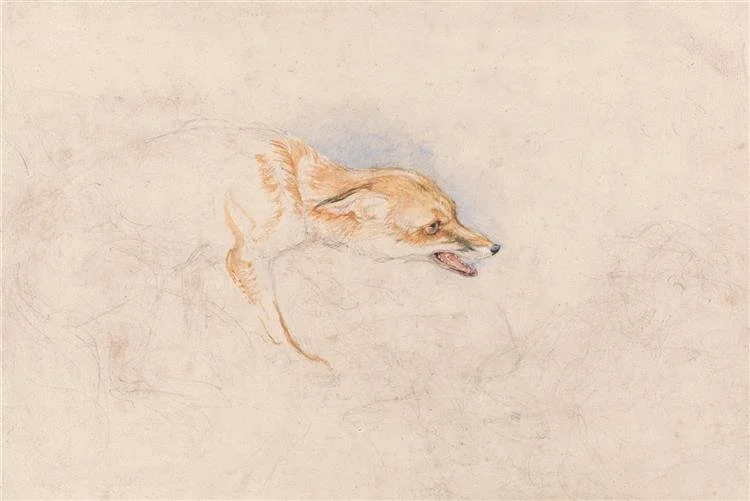
By Brandon Ligon
My husband washes his hands in the sink. Our kitchen overlooks a small walled garden: we moved in last summer, a house nestled amidst a quiet suburban enclave. When he saw the dirt lot through the window, he knew we had to live here.
Flowering vines now curl over the cinderblock wall. A sweet citrus scent, evoking the orange tree in our garden, overtakes the kitchen. My husband turns off the faucet and dries his hands. It was important to him that we add drops of orange to the kitchen soap, to invite the garden into our home. His sense of smell continues to amaze me.
“When I was a fox,” he would say, “gardens were my favorite place to forage.”
I think that is why he chose this home. Where I saw a dirt lot, he saw possibility: my husband understood the secret language of terrain, how life can sprout from seemingly nothing. His hands now dry, he brings them to his nose and sniffs deeply. Sheepishly, he grins. “Old habits die hard.”
I didn’t believe him when he first told me. On our third date, as we sat in a clattering café during a sunlit spring morning, reading our menus, deciding which drinks would soothe us, he scratched his wrist and said, “I used to be a fox.”
I thought it was a metaphor. Giggling, I stared into his eyes, and they seemed a little wild.
“Vulpes vulpes,” he said proudly. He raised the menu to his face, covering an indecipherable expression that left me leaning over the small round table in intrigue. Then he slammed down the menu and looked intently at me, licking his teeth and grinning.
The waiter came before I could begin to form my question. My date ordered vanilla caramel coffee with cream that would swirl into a heart; I was boring and asked only for green tea. Once we were alone again, he raised his eyes to mine. “I don’t miss drinking rainwater from the road.” We had been given a couple glasses of water, and he slurped happily at his. “The water here is so fresh.”
By this moment, I realized he was earnest. After our drinks arrived, he told me stories about his time as a fox, about how he would chase the neighborhood cats, the challenges of living without being seen. He even showed me a scar on his shoulder, a bite from another fox—he tugged his shirt over his arm so I could see the faint red marks. Panicking, I looked around us and whispered, “We’re in public.” Shrugging, he raised the shirt back onto his shoulder.
He never did explain how he became a fox. I don’t think he understood either, nor did he know how he became human again. My husband was adaptable in this way—if he awoke as a fox, it would simply be another day to figure out.
He did tell me about the morning it happened.
We were tucked in bed together, our bodies exchanging warmth three weeks before our wedding day. I was listening to my fiancé’s breaths in the darkness of the room, faint moonlight trickling through the window and illuminating his pensive face.
“I awoke from deep sleep to fur brushing the sheets, my snout pressed against the pillow. I couldn’t leave the apartment, couldn’t get help.” He sighed. “I was gnawing through a plastic-wrapped bread loaf when I heard the door slam open. My ears flicked forward as fresh air prickled my whiskers. I survived only because rent was overdue.”
He estimates that he spent three to four months as a fox. Of course, he told me, foxes don’t follow calendars, but he knew that his earliest days wandering the streets were wet and muggy, and they had cleared and brightened by the time he found himself human again.
“I mainly remember the cold,” my husband told me during our honeymoon. We were floating on a tight little boat, dazzled by silver lights and bemused by our misshapen reflections in the water and mirrored walls—we were in the Tunnel of Love, a childish thing, but that was what he wanted. As we cruised through the dark passageway, he leaned back against the hard plastic seat.
“You get used to the damp fur, how it starts to smell like the earth and everywhere you’ve been.” His eyes closed, and he breathed in the dank tunnel air.
“Waking up without fur was the hardest part. Even through days without food or water, evenings when I didn’t know whether I would survive until the next morning, the fur was my ever-present companion. I was stripped bare, the cold a shock to my skin, and I realized I no longer knew how to be human.”
We clambered out of the dingy little boat, stiff and stretching. Bright lights and a whiff of caramel popcorn deluged our senses as the amusement park opened before us. My husband lingered by the ticket register and thanked the teenage worker for the ride. Straightening his shirt, he bounded along, waving me over, eyes wide and smiling.
After three years together, I’ve come to accept his foxlike tendencies. As we seat ourselves for dinner, the dining room smelling strongly of citrus and baked goods, a feral stare overtakes my husband’s gaze. His nose quivers in front of a buttered sweet roll—he snaps the bread between his jaws and drops to the floor, running on all fours to the bedroom, where he’ll remain for much of the evening. He’s explained this habit to me before, though I still struggle to understand: “As a fox, impulse is the only way to survive.”
Eventually, after he’s chewed through the bread and curled into his corner, his human mind resurfaces, and he joins me in bed as I read a book. We lay together, no words exchanged, because stillness is the only language our bodies desire.
Brandon Ligon is a writer, composer, and acoustic ecologist based in Arizona. Through soundscape research and storytelling, he aims to understand the lived realities of other species. Dreams, night, and the nonhuman are major inspirations for his work, striving to reveal the hidden nuances to our daily lives.